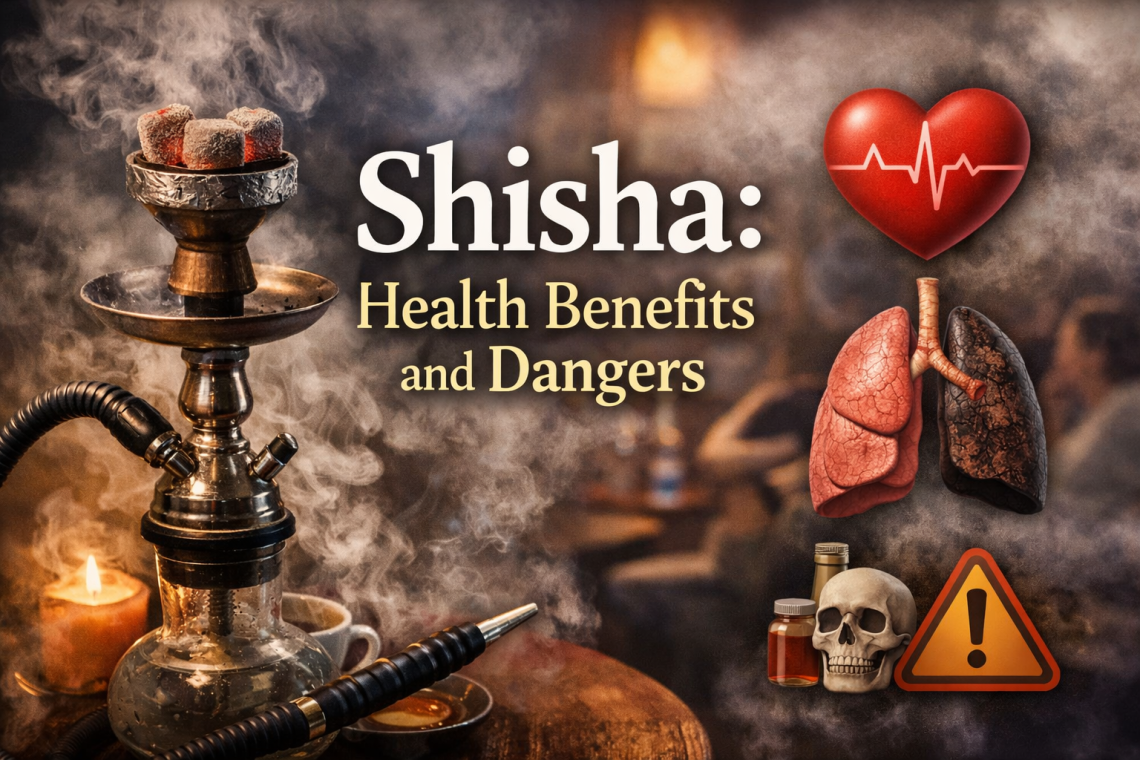
Shisha health benefits dangers are often misunderstood, as many people think hookah smoking is safer than cigarettes because of its smooth taste and water filtration. In reality, scientific studies show it still carries serious health risks.
Although the smoke feels lighter, it still contains toxic substances linked to shisha health benefits dangers, and the water does not remove harmful chemicals.
What Is a Hookah and How Does It Work?
A hookah is a water pipe used to smoke flavored tobacco. It consists of a bowl, a body, a water chamber, a hose, and a mouthpiece. The tobacco is heated using burning charcoal placed on top of the bowl.
As the tobacco burns, smoke passes through the water before being inhaled. While this process cools the smoke, it does not eliminate toxic compounds that damage the body.
Shisha Health Benefits Dangers Explained Clearly
Some users assume hookah smoking has health benefits because it feels smoother than cigarette smoke. In reality, there are no proven health benefits of shisha use, only significant dangers.
The water does not filter out nicotine, tar, or heavy metals. As a result, users inhale harmful substances that affect the lungs, heart, and other vital organs.
Chemical Exposure in Hookah Smoke
Hookah smoke contains high levels of toxic chemicals, including carbon monoxide, tar, and carcinogens. In many cases, users are exposed to higher levels of carbon monoxide than cigarette smokers.
This happens because hookah sessions often last much longer. A single session can last an hour or more, leading to deeper and more frequent inhalation of smoke.
Health Risks Linked to Hookah Smoking
Regular hookah use is associated with serious diseases. These include cancers of the lungs, mouth, esophagus, stomach, and bladder. The risk increases with frequent and prolonged use.
Hookah smoking is also linked to heart disease, chronic lung conditions, and carbon monoxide poisoning. These health effects are similar to, or worse than, those caused by cigarettes.
Nicotine Addiction and Dependency
Like cigarettes, hookah tobacco contains nicotine. Nicotine is a highly addictive substance that keeps users dependent on tobacco products.
Many people underestimate nicotine intake from hookah. Because sessions are longer, the total nicotine absorbed can be equal to or greater than smoking multiple cigarettes.
Shisha Health Benefits Dangers and Secondhand Smoke
Secondhand hookah smoke is dangerous to non-smokers nearby. It contains the same toxic chemicals inhaled by the smoker, putting others at risk.
Children, pregnant individuals, and people with respiratory conditions are especially vulnerable. Exposure can lead to breathing problems and other long-term health issues.
Risks of Sharing Hookah Equipment
Hookah Use During Pregnancy
Smoking hookah during pregnancy increases health risks for both the mother and baby. Studies link hookah use to low birth weight and developmental issues.
Nicotine and carbon monoxide reduce oxygen supply to the fetus. This can affect growth and increase the risk of pregnancy complications.
Electronic Hookahs and Vaping Devices
Electronic hookahs, also called e-hookahs, use batteries to heat liquid into vapor. Some versions contain nicotine, while others are marketed as nicotine-free.
Research on e-hookahs is still limited, but current evidence shows they are not safe. Vaping devices can still harm lung health and should not be considered risk-free.